Can You Tint Dual-Pane or Low-E Windows? What Redwood City Homeowners Need to Know
Tinting dual-pane or Low-E windows is possible, but the film must match the glass construction.
Modern insulated windows already manage heat differently from older single-pane glass. Adding the wrong film can increase solar absorption and thermal stress. The right residential film can reduce heat and glare while working safely with compatible dual-pane and Low-E glazing.
Key Takeaways:
• Window film is safe for many dual-pane windows and most Low-E glass when the correct product is selected.
• Highly absorptive or incompatible film can increase glass temperature and raise the risk of thermal stress or seal failure.
• Homeowners should check both film compatibility and their existing window warranty before installation.
Can You Put Window Tint on Dual-Pane Windows?
Yes. Many dual-pane windows can receive residential window film safely.
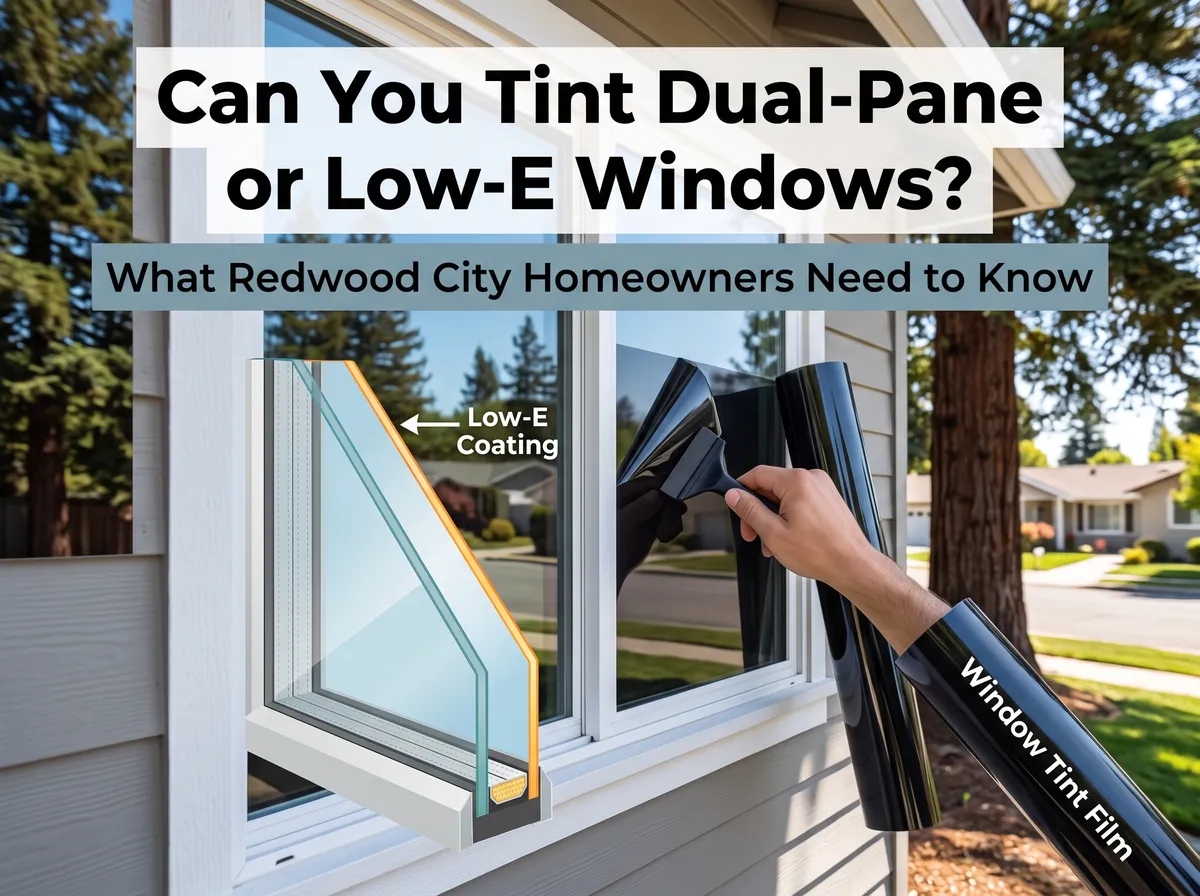
Dual-pane, or insulating glass, uses two panes separated by a sealed airspace. Modern units may also contain insulating gases and Low-E coatings to reduce heat transfer.
The presence of two panes does not automatically prevent tinting.
LLumar states that professionally installed architectural window film is safe for dual-pane windows, although certain films are more appropriate for specific glass configurations.
The important question is not:
“Can double-pane glass be tinted?”
It is:
“Which film is approved for this particular double-pane window?”
Film changes the way solar energy passes through, reflects from, and is absorbed by glass.
Excessive solar absorption can raise glass temperature. LLumar warns that too much absorption can contribute to glass breakage or insulating-glass seal failure.
That is why professional installers use film-to-glass compatibility recommendations instead of selecting film based only on appearance.
For Redwood City homeowners dealing with hot afternoon rooms, the safest solution may be a lighter, high-performance solar-control film rather than an extremely dark product.
Premier Window Tinting offers residential window tinting designed to reduce heat and glare while preserving natural light. Premier also provides in-home recommendations based on the specific windows and homeowner goals.
Can Low-E Windows Be Tinted?
Yes. Window film can be installed on most Low-E glass, but product compatibility becomes especially important.
Low-E means low emissivity.
Low-E glass contains a microscopically thin coating engineered to reduce radiant heat transfer while allowing visible light through. It can help keep solar heat outside during warmer conditions and reduce interior heat loss during cooler conditions.
This means the glass is already managing energy before window film is added.
A second solar-control layer changes the overall performance of the glazing system.
LLumar specifically states that window film is safe for most Low-E glass but recommends consulting a professional because different films suit different glass configurations.
For homeowners, the process should begin with identifying the glass.
An installer may need to determine:
• Whether the window is single- or dual-pane
• Whether it has a Low-E coating
• The type of existing glazing
• How much direct sunlight reaches the window
• The film's solar absorption characteristics
• Whether the film manufacturer approves that combination
Low-E glass and Low-E window film should also not be confused.
Low-E glass has a coating built into the window system.
Low-E window film is an aftermarket film designed to improve thermal performance.
3M, for example, offers Low-E window films intended to improve insulation while also rejecting solar heat.
The right product depends on what the existing window already does.
If your main problem is an overheating living room, you may need solar-control film.
If glare is the bigger issue, a different film may provide a better balance between light transmission and comfort.
Premier explains how residential film can help manage strong sunlight in its guide to reducing glare without darkening your home.
What Can Go Wrong If the Wrong Film Is Installed?
The two main concerns are thermal stress and insulating-glass seal damage.
Window film changes how solar energy interacts with glass.
Part of the sunlight is transmitted.
Part is reflected.
Part is absorbed.
Higher absorption means more energy remains in the glass as heat.
LLumar identifies solar absorptance as a critical factor when determining whether a film is suitable for a particular glazing system. Excessive absorption can heat glass enough to contribute to breakage or seal failure.
The International Window Film Association makes the same point.
The IWFA states that window film can affect thermal stress, which is why manufacturers publish film-to-glass recommendations for trained installers.
Thermal Stress Cracks
Different areas of one pane can heat at different rates.
If the temperature difference becomes large enough, the stress can contribute to cracking.
The risk varies with:
• Glass type
• Film absorption
• Window size
• Existing damage
• Edge condition
• Exterior shading
• Solar exposure
This does not mean residential tint commonly breaks dual-pane windows.
It means film selection must account for the glass beneath it.
Insulated Glass Seal Problems
Dual-pane units depend on a sealed space between the two panes.
Excessive heat within an incompatible film-and-glass combination can place additional stress on the glazing system. Film manufacturers therefore evaluate specific products for specific window configurations.
Window Warranty Issues
Homeowners should also check the original window warranty.
Warranty policies differ by manufacturer.
For example, Pella states that if aftermarket tint contributes to a product defect, the resulting defect would not be covered under its warranty.
Before tinting newer windows, find the manufacturer and review the warranty terms.
That small step can prevent an expensive misunderstanding later.
How Should Redwood City Homeowners Choose Window Film for Dual-Pane or Low-E Glass?
Start with the glass, then choose the film.
Do not choose a residential film simply because it is the darkest or has the highest advertised heat rejection.
A professional installer should first determine whether the film is approved for the existing glazing.
A good consultation should answer four questions:
1. What Type of Glass Do I Have?
Many newer homes use insulated Low-E glass.
Older properties may contain a mix of single-pane, dual-pane, tempered, laminated, and replacement windows.
Different rooms can even have different glass.
2. What Problem Am I Trying to Solve?
Film selection should match the goal.
For example:
Excessive heat: Choose a compatible solar-control film.
Glare: Choose a film that reduces visible light enough to improve comfort.
Privacy: Select an appropriate reflective or privacy-oriented film.
Interior fading: Look for strong UV protection.
Premier's residential window tinting service focuses on heat reduction, glare control, privacy, and protection for interior furnishings.
3. Is the Film Approved for My Glass?
This is the most important technical question.
Manufacturers maintain film-to-glass guidelines because the same film may be acceptable on one window and inappropriate on another.
LLumar even provides a film-to-glass selection system that distinguishes between different Low-E and dual-pane configurations.
Do not assume one residential film fits every window in the house.
4. Does My Window Warranty Allow It?
Check before installation, especially if your windows are relatively new.
Ask whether aftermarket film changes the glass warranty.
If necessary, contact the window manufacturer directly.
Once compatibility is confirmed, professional residential film can be a practical way to improve sunny rooms without replacing the entire window system.
For Redwood City homes where afternoon sunlight creates uncomfortable rooms, Premier also explains how film can help during summer heat waves.
FREQUENTLY ASKED QUESTIONS
Q: Is window film safe for double-pane windows?
A: Yes, many window films are designed for safe use on dual-pane glass. However, the installer must match the film to the specific glazing system. Dark or highly absorptive films can increase glass temperature, so manufacturers provide compatibility recommendations. A professional should identify the glass construction before selecting the film.
Q: Can you tint Low-E glass without damaging it?
A: Most Low-E windows can be tinted with compatible architectural film. Low-E coatings already change how the glass manages heat, so film selection requires more care than choosing tint based on shade alone. The installer should confirm the glass type and use manufacturer-approved film-to-glass guidance before installation.
Q: Can window tint cause dual-pane glass to crack?
A: An unsuitable film can increase solar absorption and glass temperature, which may raise thermal stress. That does not mean professional window tint automatically causes cracks. Manufacturers account for this risk through film-to-glass compatibility guidelines. Correct product selection is one reason professional installation matters with insulated and Low-E windows.
Q: Will tinting my home windows void their warranty?
A: It depends on the window manufacturer and warranty terms. Some manufacturers may exclude damage when aftermarket tint contributes to the failure. Pella, for example, states that a defect caused by tint would not receive warranty coverage. Check your specific warranty before installing film on newer dual-pane or Low-E windows.
Find the Right Film for Your Redwood City Home
Dual-pane and Low-E windows do not automatically rule out window tinting.
They require better film selection.
Premier Window Tinting has served Redwood City since 1979 and offers residential films for heat reduction, glare control, privacy, and interior protection.
Before choosing a film, have the existing glass evaluated and confirm that the product is compatible with your window system.
Schedule a residential window tint consultation or contact Premier Window Tinting to discuss your windows and the problem you want to solve.
The safest approach is simple:
Identify the glass first. Choose the film second.
